In the eighteenth century, medicine underwent a mutation. For the first time, medical knowledge took on a precision that had formerly belonged only to mathematics. The body became something that could be mapped. Disease became subject to new rules of classification. And doctors begin to describe phenomena that for centuries had remained below the threshold of the visible and ex...
In the eighteenth century, medicine underwent a mutation. For the first time, medical knowledge took on a precision that had formerly belonged only to mathematics. The body became something that could be mapped. Disease became subject to new rules of classification. And doctors begin to describe phenomena that for centuries had remained below the threshold of the visible and expressible.
In The Birth of the Clinic the philosopher and intellectual historian who may be the true heir to Nietzsche charts this dramatic transformation of medical knowledge. As in his classic Madness and Civilization, Michel Foucault shows how much what we think of as pure science owes to social and cultural attitudes -- in this case, to the climate of the French Revolution. Brilliant, provocative, and omnivorously learned, his book sheds new light on the origins of our current notions of health and sickness, life and death.
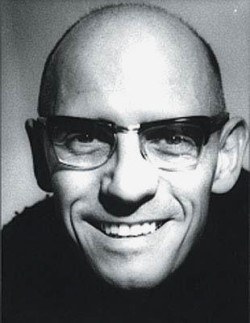
Michel Foucault, one of the leading philosophical thinkers of the 20th century, was born in Poitiers, France, in 1926. He lectured in universities throughout the world; served as director at the Institut Français in Hamburg, Germany and at the Institut de Philosophie at the Faculté des Lettres in the University of Clermont-Ferrand, France; and wrote frequently for French newspa...
Michel Foucault, one of the leading philosophical thinkers of the 20th century, was born in Poitiers, France, in 1926. He lectured in universities throughout the world; served as director at the Institut Français in Hamburg, Germany and at the Institut de Philosophie at the Faculté des Lettres in the University of Clermont-Ferrand, France; and wrote frequently for French newspapers and reviews. His influence on generations of thinkers in the areas of sociology, queer theory, cultural studies, and critical thinking are not to be underestimated. Among his many books were the Foucault Reader, Society Must Be Defended, and Great Ideas.
At the time of his death in June 1984, he held a chair at France’s most prestigious institutions, the Collège de France. Foucault was the first public figure in France to die from HIV/AIDS.
Vintage Foucault(共11册),
这套丛书还有
《The Foucault Reader》《The History of Sexuality, Vol. 1》《Madness and Civilization》《Power/Knowledge》《The Order of Things》
等
。


 米歇尔·福柯 作者


 salva
译林出版社2001版(其他版本)
 Unnamed
译林出版社2011版(其他版本)
 理一分殊
译林出版社2001版(其他版本)

 榕楠雅记~
译林出版社2022版(其他版本)

 彼得潘耶夫斯基
译林出版社2001版(其他版本)
 吴情
译林出版社2011版(其他版本)


0 有用 Livinginbpi 2018-11-24 10:50:46
again.好多新东西冒出来,真是不错。三位一体的生死病简直太有趣!不太过瘾,还希望再来一波~!
0 有用 Vitanuova 2021-01-28 03:52:44
读不懂 开始乞讨
0 有用 ClementeMoneta 2021-10-17 00:25:24
[2018]
1 有用 地下室生活-JL 2013-01-18 14:48:24
非常精彩的一本书。但是推荐看之前对于后结构主义、sovereignty,法国历史有一定的了解,然后也有一定的临床医学体验(无论体验的角色是医生、医科学生、病人或者是病人家属)。个人感觉可以把之前很多的疑惑都串联起来,也对目前医学社会学界讨论cancer, HIV/AIDS, vaccine的背后concern有了进一步了解,也知道为什么医学社会学会通过挖掘病人(或者病人家属等社团)的叙述来挑战bi... 非常精彩的一本书。但是推荐看之前对于后结构主义、sovereignty,法国历史有一定的了解,然后也有一定的临床医学体验(无论体验的角色是医生、医科学生、病人或者是病人家属)。个人感觉可以把之前很多的疑惑都串联起来,也对目前医学社会学界讨论cancer, HIV/AIDS, vaccine的背后concern有了进一步了解,也知道为什么医学社会学会通过挖掘病人(或者病人家属等社团)的叙述来挑战biomedicine的sovereignty. 下一步想了解这些知识在西方医学社会学界如何进一步发展;然后国内如何运用。 (展开)
0 有用 🌕🌖🌗✨ 2024-03-12 20:22:17 中国香港
事物的厚道导致不可见性 心灵的洞察之光才可能照亮事物的厚度 知识是本质的,不是个体的 个体的真理是不可化约的 因此,福柯正式承认了经验的察觉在知识活动上的合法地位。 医生与病人是面对面的直面关系 医生面对尸体时,不再接受语言的约束,完全自由地考察(是不对等的关系) 病人的床是研究的空间 若从康德式批判哲学的角度看,福柯再问:临床医学如何可能? 但这一发问缺少了历史向度。 创伤与它带来的痛楚的关系之... 事物的厚道导致不可见性 心灵的洞察之光才可能照亮事物的厚度 知识是本质的,不是个体的 个体的真理是不可化约的 因此,福柯正式承认了经验的察觉在知识活动上的合法地位。 医生与病人是面对面的直面关系 医生面对尸体时,不再接受语言的约束,完全自由地考察(是不对等的关系) 病人的床是研究的空间 若从康德式批判哲学的角度看,福柯再问:临床医学如何可能? 但这一发问缺少了历史向度。 创伤与它带来的痛楚的关系之转变 临床医学的诞生不但来自对医学知识的深层的改组,也是来自关于疾病的论说之可能性的重组,以经验观察与论述的互相扣连,因此“临床医学如何可能?”这是一门具有历史面向的知识论。 (展开)