Shallow, poorly educated Kitty marries the passionate and intellectual Walter Fane and has an affair with a career politician, Charles Townsend, assistant colonial secretary of Hong Kong. When Walter discovers the relationship, he compels Kitty to accompany him to a cholera-infested region of chinese mainland, where she finds limited happiness working with children at a convent...
Shallow, poorly educated Kitty marries the passionate and intellectual Walter Fane and has an affair with a career politician, Charles Townsend, assistant colonial secretary of Hong Kong. When Walter discovers the relationship, he compels Kitty to accompany him to a cholera-infested region of chinese mainland, where she finds limited happiness working with children at a convent. But when Walter dies, she is forced to leave China and return to England. Generally abandoned, she grasps desperately for the affection of her one remaining relative, her long-ignored father. In the end, in sharp, unexamined contrast to her own behavior patterns, she asserts that her unborn daughter will grow up to be an independent woman. The Painted Veil was first published in 1925 and is usually described as a strong story about a woman's spiritual journey. To more pragmatic, modern eyes, Kitty's emotional growth appears minimal. Still, if not a major feminist work, the book has literary interest. Sophie Ward's uninflected reading is competent if not compelling.
William Somerset Maugham, CH (January 25, 1874 – December 16, 1965) was an English playwright, novelist, and short story writer. He was one of the most popular authors achieving recognition as the highest paid of his profession during the 1930s.
Commercial success with high book sales, successful play productions and a string of film adaptations, backed by astute stock market i...
William Somerset Maugham, CH (January 25, 1874 – December 16, 1965) was an English playwright, novelist, and short story writer. He was one of the most popular authors achieving recognition as the highest paid of his profession during the 1930s.
Commercial success with high book sales, successful play productions and a string of film adaptations, backed by astute stock market investments, allowed Maugham to live a very comfortable life. Small and weak as a boy, Maugham had been proud even then of his stamina, and as an adult he kept churning out the books, proud that he could.
Yet, despite his triumphs, he never attracted the highest respect from the critics or his peers. Maugham himself attributed this to his lack of "lyrical quality", his small vocabulary and failure to make expert use of metaphor in his work.
It seems equally likely that Maugham was underrated because he wrote in such a direct style. There was nothing in a book by Maugham that the reading public needed explained to them by critics. Maugham thought clearly, wrote lucidly, and expressed acerbic and sometimes cynical opinions in handsome, civilized prose. He wrote in a time when experimental modernist literature such as that of William Faulkner, Thomas Mann, James Joyce and Virginia Woolf was gaining increasing popularity and won critical acclaim. In this context, his writing was criticized as "such a tissue of clichés that one's wonder is finally aroused at the writer's ability to assemble so many and at his unfailing inability to put anything in an individual way"[16].
Maugham's homosexual leanings also shaped his fiction, in two ways. Since, in life, he tended to see attractive women as sexual rivals, he often gave the women of his fiction sexual needs and appetites, in a way quite unusual for distinguished authors of his time. "Liza of Lambeth," "Cakes and Ale" and "The Razor's Edge" all featured women determined to service their strong sexual appetites, heedless of the result.
Also, the fact that Maugham's own sexual appetites were highly disapproved of, or even criminal, in nearly all of the countries in which he traveled, made Maugham unusually tolerant of the vices of others. Readers and critics often complained that Maugham did not clearly enough condemn what was bad in the villains of his fiction and plays. Maugham replied in 1938: "It must be a fault in me that I am not gravely shocked at the sins of others unless they personally affect me."
Maugham's public account of his abilities remained modest; toward the end of his career he described himself as "in the very first row of the second-raters". In 1954, he was made a Companion of Honour.
Maugham had begun collecting theatrical paintings before the First World War and continued to the point where his collection was second only to that of the Garrick Club[17]. In 1948 he announced that he would bequeath this collection to the Trustees of the National Theatre, and from 1951, some 14 years before his death, it began its exhibition life and in 1994 they were placed on loan to the Theatre Museum in Covent Garden.


![[英国] 威廉·萨默塞特·毛姆](https://img3.doubanio.com/view/personage/m/public/7bb374fa2a2cbe9680efabfe451e51c2.jpg) 威廉·萨默塞特·毛姆 作者
威廉·萨默塞特·毛姆 作者

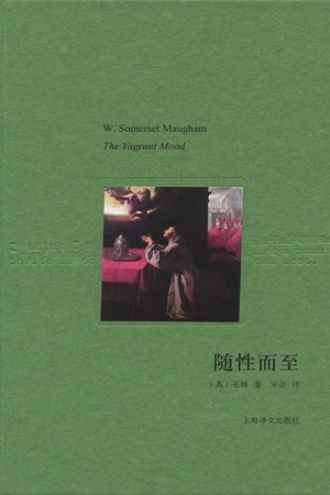
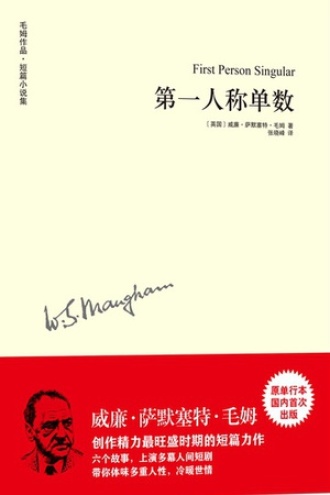


 芒果奶酱
重庆出版社2012版
芒果奶酱
重庆出版社2012版

 亚比煞
重庆出版社2006版
亚比煞
重庆出版社2006版
 MK™
重庆出版社2012版
MK™
重庆出版社2012版


 苹果
重庆出版社2006版
苹果
重庆出版社2006版
 可可胡
黑龙江科学技术出版社2016版
可可胡
黑龙江科学技术出版社2016版
 萨尔斯堡的树枝
重庆出版社2012版
萨尔斯堡的树枝
重庆出版社2012版
 分裂人木屋
江西人民出版社2016版
分裂人木屋
江西人民出版社2016版


3 有用 不死的缺水鱼 2015-06-17 22:32:41
与电影的爱情和救赎的主题相比,书更像是一个女性的自我觉醒
0 有用 Eudemonia 2022-02-06 06:33:52
可能是我期待值太高,情理之中,意料之中,这本书到最后并没有给我带来过多的震撼。其实不太喜欢毛姆笔下的女性,他太喜欢讽刺,在他的笔下没几个有个性的女人,甚至感觉毛姆是不是厌女?
0 有用 Zii 2015-06-04 21:27:50
结尾太平了吧 感觉像草草收尾 不爱的人永远无法爱上吗 本能的爱和精神的爱 没有前者 后者的力量竟会如此薄弱吗
0 有用 No Surprises 2019-03-16 12:32:53
2019年第二本英文书:先看了电影,这次才下决心看书。电影试听觉效果很不错,但书更深刻,它涉及了女性的自我认知和自我解放。书的开头和结尾都讨论到kitty的原生家庭,她通过思考与父母的关系,认识到她之所以成为现在的自己的原因。她从一开始的轻浮无知,到对自己失望,但逐渐接纳了自己。凯蒂从walter和修女身上认识到人类的神性(但这种神性不一定是她推崇的,因为神性抹煞人最基础的友爱、情爱,她觉得是遥远... 2019年第二本英文书:先看了电影,这次才下决心看书。电影试听觉效果很不错,但书更深刻,它涉及了女性的自我认知和自我解放。书的开头和结尾都讨论到kitty的原生家庭,她通过思考与父母的关系,认识到她之所以成为现在的自己的原因。她从一开始的轻浮无知,到对自己失望,但逐渐接纳了自己。凯蒂从walter和修女身上认识到人类的神性(但这种神性不一定是她推崇的,因为神性抹煞人最基础的友爱、情爱,她觉得是遥远而不真实的),又从她和查理偷情这件事看到了兽性(并不只是野蛮,也有控制不住的欲望),然后回归了正确的自我认知,对未来孩子充满希冀(希望是个女儿,教她成长为有自己尊严,不需依托任何男人的独立女性)。我觉得毛姆作为一个男性作家,对女性的认识能达到这种层面非常高了。 (展开)
2 有用 shirley 2016-04-27 23:07:55
电影改动太大,毛姆知道了估计要跳脚。