In this bold, sweeping study of the development of Western economies, Douglass C. North sets forth a new view of societal change.
At the core of Professor North's investigation is the question of property rights, the arrangements individuals and groups have made through history to deal with the fundamental economic problem of scarce resources.
In six theoretical chapters, Professor North examines the structure of economic systems, outlines an economic theory of the state and the ideologies that undergird various modes of economic organization, and then explores the dynamic forces such as new technologies that cause institutions to adapt in order to survive. With this analytical framework in place, major phases in Western history come under careful reappraisal, from the origins of agriculture and the neolithic revolution through the political economy of the ancient and medieval worlds to the industrial revolution and the economic transformations of the twentieth century.
Structure and Change in Economic History is a work that will reshape many established explanations of the growth of the west.
Structure and Change in Economic History的创作者
· · · · · ·
Douglass Cecil North is also professor of history and a fellow of the Center in Political Economy. He was on the faculty of the University of Washington and held visiting chairs at Cambridge and Rice Universities. In 1993 he was awarded the Nobel Memorial Prize in Economics. He is a fellow of the American Academy of Arts and Sciences and has served as president of the Economic ...
Douglass Cecil North is also professor of history and a fellow of the Center in Political Economy. He was on the faculty of the University of Washington and held visiting chairs at Cambridge and Rice Universities. In 1993 he was awarded the Nobel Memorial Prize in Economics. He is a fellow of the American Academy of Arts and Sciences and has served as president of the Economic History Association and the Western Economic Association. His major interest is the evolution of economic and political institutions. The effects of institutions on the development of economies through time is a major emphasis in his work in both economic history and development. Among his books are The Rise of the Western World (with R. P. Thomas, 2nd edition), 1973, Growth and Welfare in the American Past, 1973, Structure and Change in Economic History, 1981, and Institutions, Institutional Change and Economic Performance, 1990.
【转载】原文请见: http://kph.ycool.com/post.3072621.html 快要崩溃了,上来吐槽。 阅读Structure and Change in Economic History是Theory of Property Rights的作业,因为我之前带了中文本(但是由于觉得过于晦涩,囫囵吞枣读了一遍就放下了),所以索性就对照着中文本...
(展开)


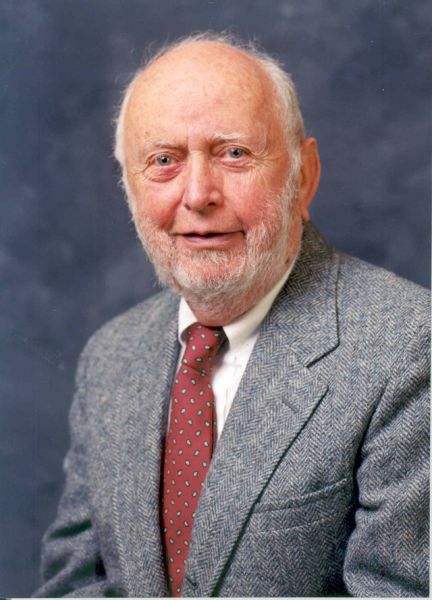 道格拉斯·诺斯 作者


 withinbeyond
商务印书馆1992版(其他版本)
 月之仙者
上海人民出版社1994版(其他版本)
 水草狗
商务印书馆1992版(其他版本)
 凯风
上海人民出版社1994版(其他版本)
 蜘蛛也会飞
上海人民出版社1994版(其他版本)
 摸鱼办张主任
上海人民出版社1994版(其他版本)
 三秋🍃
上海人民出版社1994版(其他版本)
 皮特王
商务印书馆1992版(其他版本)


2 有用 星鳥 2012-05-02 00:46:46
我會說我一邊讀漢譯本一邊把這本也翻完了,哼哼。要加強英文學術能力啊。
3 有用 柏拉图下港口 2023-03-31 16:54:34 北京
技术革命前人类受马尔萨斯陷阱支配,人口膨胀会带来对资源的争夺,获胜的族群将排他性地界定自己对资源的产权,最初的产权是共同体形式,而随着经济规模扩大,专业化与分工也在提高,这就需要国家来以服务换取租金,国家有二重动机:界定产权结构以最大化租金;降低交易成本以提高税收收入,因此国家可能促进增长,也可能阻碍无效率制度的淘汰。为了维持既存产权结构和收入分配而不引发造反,人们需要意识形态以将现状合法化。国家... 技术革命前人类受马尔萨斯陷阱支配,人口膨胀会带来对资源的争夺,获胜的族群将排他性地界定自己对资源的产权,最初的产权是共同体形式,而随着经济规模扩大,专业化与分工也在提高,这就需要国家来以服务换取租金,国家有二重动机:界定产权结构以最大化租金;降低交易成本以提高税收收入,因此国家可能促进增长,也可能阻碍无效率制度的淘汰。为了维持既存产权结构和收入分配而不引发造反,人们需要意识形态以将现状合法化。国家有不稳定性,因为相对价格变动将导致群体间相对财富的变化,日渐强大的群体将感到观念与现实不符,因此有人会提出新的意识形态,同时克服集体行动的搭便车难题,带来经济秩序的变迁,同时新的观念取得统治地位。诺斯识别出了分工与交易成本的张力,但在本书中较少涉及确权背后的暴力过程(原始积累和产权谁更决定性?)。 (展开)
0 有用 [已注销] 2015-09-09 07:33:05
5- 启发了后来好多大佬的著名paper
0 有用 野生豆苗 2019-10-05 10:50:49
In the middle of rational choice and historical institutionalism?
0 有用 想念夏天 2021-09-06 16:36:44
North 很大神,对经济发展/人类发展史 做了很有见地的总结,书中不少地方结合了 罗斯(L.W. Coase) 的理论和发现。感觉是学习经济史或者组织理论的必读书之一了。。